
This exposure allows an attacker easier capability to gain access and control physical infrastructure such as power grids, traffic light systems, security and water systems among others, according to a report by security provider Bitsight.
The importance of industrial control systems goes beyond just being a computer system, where if an attacker gets in and takes control, all bets are off as to the damage that could occur.
To measure device exposure, Bitsight identified exposed ICSs and mapped them to its inventory of global organizations. The company’s analysis found contrary to what industry security professionals have been preaching for years, thousands of organizations are using ICSs directly reachable from the Internet, presenting a series of potential consequences of which private and public sector leaders should be aware.

Cyberattacks leveraging physical infrastructure are not new:
- Last month, reports claimed attackers breached a national power grid in Asia
- A ransomware event in May 2021 targeted the Colonial Pipeline, disrupting oil and gas delivery on the eastern coast of the United States, causing shortages and panic
- Industroyer malware in 2016 targeted Kyiv, Ukraine’s electrical supply, shutting down power in targeted regions
Bitsight identified exposed industrial control systems around the world, revealing concerning and promising trends. Bitsight studied systems communicating via the most commonly used ICS protocols, including Modbus, KNX, BACnet, Niagara Fox and others.
The number Internet-facing industrial control systems remains high at nearly 100,000 as of June, but Bitsight’s research showed a promising trend, which is the decline from 2019 to June 2023 in the number of ICSs exposed. This is a positive development, suggesting organizations may be properly configuring, switching to other technologies, or removing previously exposed ICSs from the public internet.
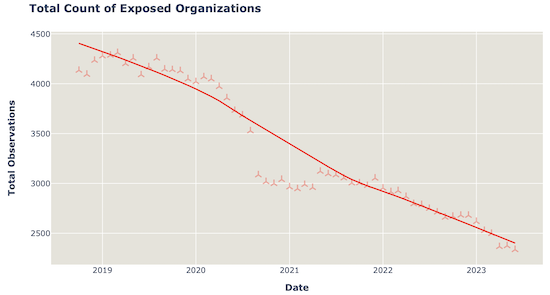
Total count of exposed organzations has gone down significantly since 2019.
Source: Bitsight
While the aggregate number of exposed ICSs may be trending downward, Bitsight detected unique behavior on a protocol-by-protocol basis.
Exposed systems and devices communicating via the Modbus and S7 protocols were more common in June 2023 than before, with the former increasing in prevalence from 2020 and the latter more recently from mid-2022. However, exposed industrial control systems communicating via Niagara Fox have been trending downward since 2021. Organizations should be aware of these changes in prevalence to inform their OT/ICS security strategies. One of the first steps in mitigating OT risk is knowing where the risk is likely to lie.
Bitsight found the top 10 countries by number of organizations having at least one exposed ICS (“exposed organizations”) are:
- United States
- Canada
- Italy
- United Kingdom
- France
- Netherlands
- Germany
- Spain
- Poland
- Sweden
As of June, the top 10 sectors by exposed organizations are:
- Education
- Technology
- Government/Politics
- Business Services
- Manufacturing
- Utilities
- Real Estate
- Energy/Resources
- Tourism/Hospitality
- Finance
In terms of recommendations, Bitsight said organizations should immediately engage in outreach and remediation efforts:
- Identify any industrial control systems deployed by your organization and/or your third-party business partners, and promptly assess the security of these systems
- Remove any industrial control systems from the public Internet
- Employ safeguards like firewalls to protect against unauthorized access to your industrial control systems
Click here for more on the report.