
Students in Tandon’s new Master of Science in Emerging Technologies program will have the opportunity to enroll in one of nine interdisciplinary concentrations – including in-demand fields like cybersecurity, robotics, and data science – all offered fully online.
The 30-credit program is distinct from other master’s programs as it offers an unprecedented level of flexibility for an advanced engineering degree. Students will choose 12 credits from their chosen concentration, including a final capstone course geared toward solving a specific concentration-related challenge. The remaining 18 credits can be composed of electives from more than 50 courses offered across the entire Emerging Technologies program.
Explore Other Fields
Typically, graduate engineering programs offer degrees in standard fields like mechanical or electrical engineering. They equip students with deep knowledge in that discipline, but offer limited opportunities to explore other fields due to strict program requirements.

The M.S. in Emerging Technologies, on the other hand, emphasizes breadth. It is designed with industry in mind for a fast-evolving tech-driven job market, and encourages students to gain expertise in certain knowledge domains – like healthcare or cybersecurity, areas with strong career prospects – without being strictly beholden to traditional disciplinary silos that define the field.
“The goal of the program is to cross engineering’s disciplinary boundaries and meet the needs of professionals who work at the intersection of several fields, or who conduct innovative, interdisciplinary research,” said Peter Voltz, associate dean for undergraduate and graduate academics and the academic director of the new master’s program.
“We want to arm more professionals with engineering and technology skills that support their careers, even those in roles without traditional engineering titles or job descriptions,” said Shivani Dhir, assistant dean of digital learning. “For example, someone who wants to be a product manager for a cybersecurity firm might choose a cybersecurity concentration coupled with electives in artificial intelligence, machine learning and data science. Or someone in a new product marketing role at a global consumer brand who wants to collaborate more effectively with the engineering and design team may opt for an innovation & change concentration with some software development and user experience electives. This program allows you to chart your own academic journey and is ideal for working professionals who are pursuing career growth in cross-functional roles or integral to cross-functional teams.”
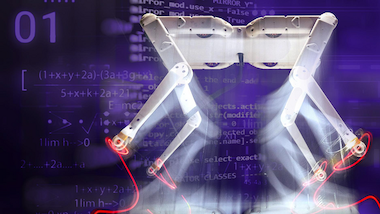
Cybersecurity is part of a new “build your own masters” program at NYU Tandon.
Source: NYU Tandon School of Engineering
The nine concentration areas within the master of science in emerging technologies are cybersecurity, data science, innovation & change, machine learning & artificial intelligence, robotics, software development, urban informatics, user experience & design, and wireless & networking.
Different Outlook
This new master’s program is the latest in a series of unconventional curriculum changes the school has rolled out on the heels of a $1 billion investment in engineering for the 21st century. The school is re-engineering several of its courses as it delivers on promises to break barriers between engineering disciplines and give students more experiential learning opportunities.
In addition to the new M.S. in Emerging Technologies, Tandon offers four other fully online M.S. degrees, in bioinformatics, cybersecurity, management of technology, and an interdisciplinary cybersecurity risk and strategy degree offered through a partnership between NYU Tandon and NYU Law.
The M.S. in Emerging Technologies will begin accepting applications on March 1 for its inaugural cohort beginning in fall 2023.
Click here for more information.