
In order to avoid this vulnerability, a research team from the Universitat Rovira i Virgili (URV) in Spain developed an innovative environment based on blockchain technology that allows users to control what happens to their personal data and what it ends up used for at all times.
Accepting cookies gives permission for sensitive information to be shared, which puts at risk the privacy of users, who are uncertain how it will end up used and for what purposes.
The response of many web providers to this requirement has been to present users with a form when they access a service: The cookie acceptance form.

But the law does not define how these providers should transparently demonstrate they have this consent and most users do not know what rights they have over their personal data or have efficient methods to be on the lookout for what third parties do with their data.
The study led by the URV has consisted of creating a personal data management platform based on blockchain technology. It generates smart contracts published for life on the block chain which means no one can interfere with them. That is to say, the terms agreed cannot end up modified and the binding nature of the contract remains solid.
In order to use this smart contract, the user must install a program in the browser that intercepts the request for consent and responds in accordance with their preferences.
“Taking this small step makes browsing more agile and secure and complies with the main requirements of the European data protection law,” said Jordi Castellà, a researcher at the URV’s Department of Computer Engineering and Mathematics, who took part in the research.
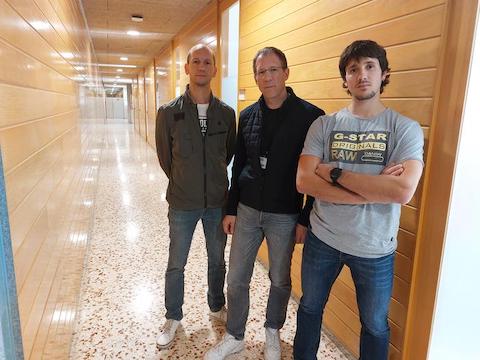
Looking to make browsing more agile and secure are from left to right, Alexandre Viejo, Jordi Castellà and Cristòfol Dauden.
Source: URV
In addition, all the consents accepted can end up controlled and managed from a mobile application to keep track of who has them, when they gained approval, what they are using them for and how to modify the details at any time.
For web service providers, this environment enables them to demonstrate, in the event of an audit, they have obtained consent from users. It would be possible to gather the information through a secure access control system.
This research makes the management of personal data more secure and gives users more and better control over their information.