
While the official confirmed number of affected users amounts to 18,000, there is limited information about what kind of organizations used the backdoored SolarWinds versions and fell victim to the attack. Along those lines, Kaspersky ICS CERT researchers assessed internal and publicly available information and defined which industries have been affected the most.
Through analysis of all available decoded internal domain names obtained from DNS names generated by the Sunburst DomainName Generation Algorithm, researchers were able to compile a list of nearly 2,000 readable and attributable domains.
“The SolarWinds software is highly integrated into many systems around the globe in different industries and, as a result, the scale of the Sunburst attack is unparalleled – a lot of organizations that had been affected might have not been of interest to the attackers initially. While we do not have evidence of a second-stage attack among these victims, we should not rule out the possibility that it may come in the future. Therefore, it is crucial for organizations that may be victims of the attack to rule out the infection and make sure they have the right incident response procedures in place,” said Maria Garnaeva, senior security researcher at Kaspersky.

Kaspersky experts shared the following recommendations for possible victims of the SolarWinds compromise:
- Check whether backdoored SolarWinds versions are installed. Known affected versions include software builds 2019.4 HF 5, 2020.2 with no hotfix installed, and 2020.2 HF1.
- Check for known indicators of compromise (IOCs). CISA published Alert AA20-35A with an extensive list. https://us-cert.cisa.gov/ncas/alerts/aa20-352a
- If you have detected a compromised SolarWinds installation or related IOCs, initiate a security incident investigation and launch an incident response procedure, considering all possible attack vectors:
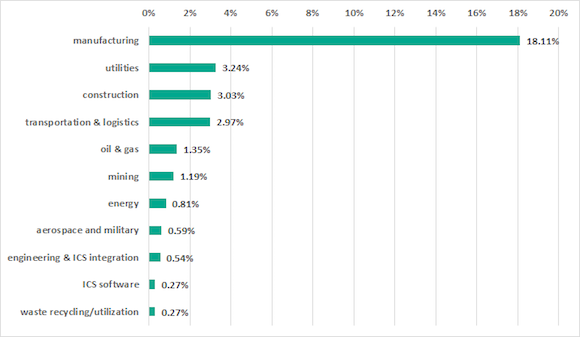
Manufacturing tops the list of industrial organizations that used backdoored SolarWinds versions.
Source: Kaspersky
a. Isolate assets known to be compromised, while keeping the system operable
b. Prevent IOCs that could be useful for the investigation from being deleted
c. Check all network logs for suspicious network activity
d. Check system logs and journals for illegitimate user account authentication
e. Locate suspicious process activity and investigate memory dumps and associated files
f. Check historical command-line data associated with suspicious activity
Click here for the full research report.