
To that end, in the first quarter, industrial security provider Dragos identified 708 ransomware incidents impacting industrial entities worldwide, representing an increase from 600 incidents documented in the fourth quarter last year.
This rise underscores the escalating frequency and complexity of ransomware operations affecting sectors such as manufacturing, transportation, industrial control systems (ICS) equipment, and engineering, according to the Dragos Industrial Ransomware Analysis: Q1 2025 report written by Abdulrahman H. Alamri, senior intel analyst II at Dragos.
Manufacturing continued to be the most impacted sector, accounting for 68 percent (480 incidents) in Q1 compared to 70 percent (424 incidents) in Q4 2024.

High-Impact Incidents
Dragos did not detect any new ransomware variants specifically engineered to target ICS environments this quarter. However, high-impact incidents such as the South African Weather Service (SAWS) outage, which severely disrupted aviation and agricultural forecasting, and the attack on Unimicron, a printed circuit board manufacturer, point out the operational and supply chain disruptions ransomware can inflict on industrial organizations.
In Q1 2025, ransomware groups and affiliates leveraged a combination of emerging and persistent tactics, techniques, and procedures (TTPs), according to the report.
Emerging TTPs included AI-driven malware employed by FunkSec, encryption-less extortion methods, nation-state convergence as exemplified by Moonstone Sleet’s use of Qilin ransomware, and advanced endpoint detection and response (EDR) evasion tools like RansomHub’s EDRKillshifter.Persistent TTPs observed were the continued exploitation of zero-day vulnerabilities such as the Windows Common Log File System (CLFS), sophisticated AI-enhanced phishing campaigns, abuse of remote access tools, targeted ESXi ransomware attacks with SSH tunneling, credential theft, and brute-force attacks, according to the report.
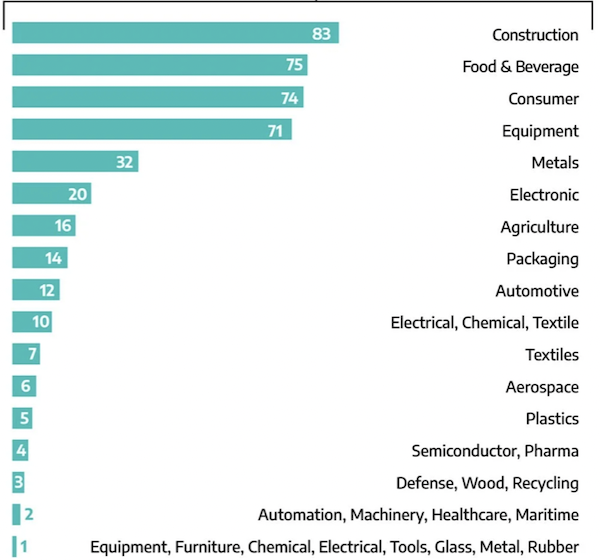
Ransomware incidents by industry sector in the first quarter this year.
Source: Dragos
Cl0p ransomware incidents skyrocketed from just two incidents in Q4 2024 to 154 incidents in Q1 2025, attributed mainly to exploiting Cleo Managed File Transfer vulnerabilities, according to the Dragos report.The intensifying convergence of IT and OT further amplified operational impacts, causing IT disruptions to cascade into operational environments, as evidenced by the manufacturing delays experienced by National Presto Industries.
By outlining key incidents and emerging threats, Dragos aims to enhance awareness among industrial organizations, enabling informed decisions and proactive cybersecurity measures.
Emerging Ransomware Groups
In Q1, Dragos discovered new ransomware groups emerging, significantly increasing threats to industrial and enterprise organizations through sophisticated targeted cyber operations, including: FunkSec, NightSpire, Kairos, Weyhro, Apos, Morpheus, CiphBit, Skira, CrazyHunter, Hellcat, Van Helsing, and Ralord.
Dragos found other first quarter trends in ransomware that continued to shape the industrial cybersecurity landscape.
Ransomware groups continued leveraging zero-day vulnerabilities, notably the Common Log File System (CLFS) vulnerability, enabling attackers to escalate privileges and gain deeper network access.
Additionally, ransomware groups were persistent in exploiting widely used file transfer software vulnerabilities for initial access and encryption-less extortion.
Ransomware groups and their affiliates continue to leverage advanced artificial intelligence (AI) tools to orchestrate sophisticated phishing campaigns, significantly boosting both their precision and effectiveness. Utilizing AI-driven platforms and generative language models, attackers produced highly personalized phishing emails tailored to specific roles, interests, and communication styles of targeted individuals.
During Q1, ransomware groups increasingly adopted encryption-less extortion tactics, emphasizing data theft and public exposure threats without employing traditional encryption methods. This tactical shift significantly reduced operational complexity and accelerated adversaries’ capability to pressure victims by immediately threatening sensitive data leaks.
Credential theft, brute-force attacks, and exploitation of remote access tools continued to dominate ransomware groups’ initial access strategies in Q1, according to the report. Ransomware groups increasingly relied on compromised or weakly secured credentials as primary intrusion vectors, utilizing automated brute-forcing frameworks and credential-stuffing techniques to systematically target network perimeter devices, including VPNs, firewalls, and remote desktop services.
Click here to download Dragos’ Q1 analysis.