
By Gregory Hale
Ransomware attacks continue to hit the manufacturing sector as assaults increased almost 50 percent for the 6-month period from the fourth quarter last year through the first quarter this year, a new report found.
Ransomware attacks increased 46 percent, according to Honeywell’s 2025 Cybersecurity Threat Report. Additionally, research also found malware and ransomware increased significantly in this period skyrocketing 3,000 percent in the use of one trojan designed to steal credentials from industrial operators.
This report uses intelligence data primarily derived from Honeywell Cybersecurity solutions from October 1, 2024 to March 31, 2025, unless otherwise displayed or communicated. The solutions analyzed 253.2 billion logs, scanned 79.2 million files and triaged 4,600 events.
“One of the most surprising things we found was the adoption of old ransomware being repurposed for our industry,” said Paul Smith, author of the report and director of Honeywell Operational Technology (OT) Cybersecurity Engineering during a discussion at the 49th annual Honeywell Users Group in San Antonio, Texas.

The report shows how cybersecurity incidents in the past two quarters have had an impact on operational technology (OT) environments, from transportation sector disruptions to water critical infrastructure attacks.
Ransomware On Rise
With the 46 percent increase in ransomware extortion incidents during the report interval compared to the previous reporting period, the Cl0p ransomware group emerged as a dominant actor, surpassing others in activity, according to the report.
Additionally, in the first quarter of 2025, researchers documented an additional 2,472 reported ransomware victims.
There was also an increased prevalence of W32.Worm.Ramnit, typically a banking sector Trojan, deployed to steal industrial account credentials. There was a 3,000 percent increase in the fourth quarter of 2024 compared to the second quarter of 2024.
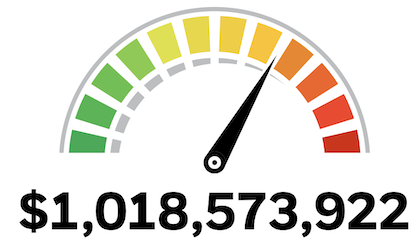
Total trackable ransom paid.
Source: 2025 Cybersecurity Threat Report
Moreover, researchers detected 1,826 unique USB threats via Honeywell’s SMX product in Q1 2025, with 124 never-before-seen threats. That indicated a persistent risk via external media and USB devices. This built on a 33 percent increase in USB malware detections in 2023, following a 700 percent year-over-year surge in 2022, according to the report.
“Definitely a tailored threat is coming with the data we are looking at,” Smith said. “The opportunistic piece where it is just pray and spray still happens, but with the education and with AI, you can create really well-tailored attacks and exploits for systems they are going after now. If an attacker wants a larger pay day as opposed to volume – volume can get you caught faster – tailored and strategic exploits will get you paid more.”
During the reporting period, Honeywell’s Advanced Monitoring and Incident Response (AMIR) service triaged 54,098 alerts resulting in 1,008 incidents, and of those, 107 ended up considered unique.
Top Incidents
The top four types of incidents from those 107 events were:
USB plug and play: This incident came in at 25 percent. A USB plug-and-play incident can pose a significant cybersecurity risk, especially when an unauthorized or malicious device connected to a system.
Account added to a local security group: Representing 16 percent of AMIR’s recorded top incidents, adding accounts to local security groups can create security risks because it grants elevated access to a system.
CB-AppControl enforcement level changed from high to low: Enforcement level is the protection level applied to computers running the Carbon Black App Control Agent, specified on a per-policy basis.
Member added to a domain controller’s security group: Active Directory Users’ and Computers’ “Security Enabled” groups end up referred to as security groups.
In terms of being vulnerable to attacks, yes, attack groups are continuing their assault on the manufacturing sector. However, understanding where the attacks are coming from and applying cyber training is key to fighting off the hacks.
“Nation state actors are something to worry about but the bulk of your incidents are from third party engineering firms plugging in their laptop and there is something kicking around in there and something crawls in,” Smith said. “We go to an auto manufacturer and they go ‘what’s this’ and we go its WannaCry, and they go ‘how did this get in?’ We go who worked on this last? They go we had this EPC come in an plug in and we go you didn’t scan their laptop? Remember those table top exercises we went through that said you should scan them because they could have something malicious on them?”