
A huge piece of the Unit 1 facility at the San Onofre Nuclear Generating Station is shipping by rail to a disposal site in Utah.
The reactor pressure vessel, which held nuclear fuel to generate electricity at Unit 1 from 1968 to 1992, has been sitting on the north end of the plant for 18 years. While the vessel contains pieces of radioactive metal and grout, it ended up encased in a cylinder made of carbon steel 2 inches thick, with a top and bottom each 3 inches thick to shield against radiation.
Once you put the vessel and its container together, it weighs 770 tons, according to Southern California Edison, the operators of the plant.
As part of the overall dismantlement effort at San Onofre that started earlier this year, the vessel will end up transferred to an upgraded rail spur adjacent to the plant and then shipped to a licensed disposal facility in the town of Clive, Utah, about 75 miles west of Salt Lake City.

The disposal site is operated by Energy Solutions, which is one of two companies Edison selected to make up a joint venture to take down buildings and infrastructure at San Onofre. Based in Utah, Energy Solutions specializes in handling nuclear material and providing services to plants going through the decommissioning process.
The exact date and other details of the shipment will not be released due to security precautions, said John Dobken, spokesman for Southern California Edison, as per U.S. Nuclear Regulatory Commission regulations. There is no liquid in the container.
“We’re committed to performing this work safely,” Dobken said. “We’ve got a very experienced team in place that’s very familiar with moving heavy loads just like this one. They move these types of heavy loads all the time.”
Dobken said the shipment meets all federal and state safety and regulatory transportation requirements and the vessel package will be protected by fencing and 24/7 security before it goes out.
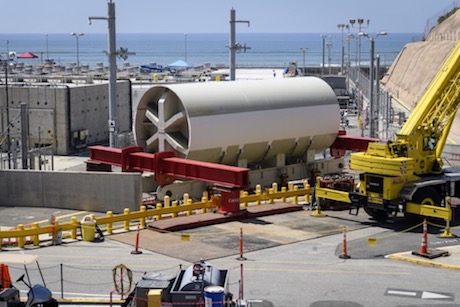
A view of the cylinder containing the reactor pressure vessel from Unit 1 at the San Onofre Nuclear Generating Station.
Source: Southern California Edison
The shipment is designated as Class A low-level waste, considered the least hazardous of radioactive waste classifications as defined by the NRC. Low-level waste can include contaminated cleaning supplies, used disposable protective clothing and reactor parts.
According to Edison, the vessel’s package has a contact dose rate of less than 0.1 millirem an hour, which is 500 times below the U.S. Department of Transportation limit for such shipments. A chest X-ray accounts for a dose of 10.0 millirem.
“This is going to be done safely and that’s what people need to know,” Dobken said. “The train moves at very slow speeds and it is very well protected.”