
Cybersecurity is a primary or secondary priority for 98 percent of organizations, according to CompTIA’s “State of Cybersecurity 2025” report. Yet only 25 percent of survey respondents feel the overall direction of cybersecurity is improving dramatically, and 22 percent characterize their organization’s cybersecurity efforts as completely satisfactory. The report surveyed nearly 1,200 business and IT professionals across seven global regions.
Cybersecurity’s status as a business imperative at all organizational levels from staff, management, executives and governing bodies may be the reason of the disconnect.
“Gone are the days when achieving cybersecurity improvement was a simple matter of purchasing updated technology,” Robinson said. “Businesses must have ongoing discussions around their cybersecurity technology stack, processes that ensure protection of assets and an organizational structure that provides cutting-edge expertise.”

To that end, the report identified a growing need to build multiple layers of cybersecurity expertise.
Among North American companies, 53 percent are considering new hiring as an option. An even greater percentage (56 percent) plan to pursue training for their current cybersecurity workforce, and 42 percent plan to offer cybersecurity certifications as a way of establishing core concepts within the team and extending skillsets into emerging focus areas.
Hiring and training require a financial commitment, though, and that remains a challenge for some.
While a significant majority of respondents said cybersecurity is a high priority at their firm, 49 percent feel it is relatively easy to procure funds for cybersecurity activities or that budgets are increasing.
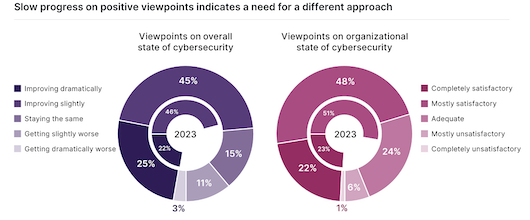
Report takes in viewpoints on overall and organizational cybersecurity.
Source: CompTIA
“Developing skills is the most significant action companies may take in improving efficiency, but there are other options as well,” Robinson said. “Increasing visibility and awareness among senior executives, establishing organizational imperatives and metrics and building policies that drive employee behavior will create a culture of cybersecurity.”
Artificial intelligence (AI) has the potential to accelerate, automate and complicate cybersecurity efforts.
Along those lines, North American companies are evenly split between an emphasis on using AI internally to improve their defense and on learning about new forms of AI-enabled attacks. Current AI-enabled use cases include monitoring network traffic, generating defense tests and predicting future breaches.
Click here to view CompTIA’s “State of Cybersecurity 2025” report.