
One of those solutions is to develop secure artificial intelligence (AI) models that not only protect personal information, but also reduce energy use. That is exactly where Kennesaw State University’s (KSU) Xinyue Zhang comes in as she is focusing on the crucial intersection of AI and cybersecurity.
“AI is everywhere now. Smartphones, watches, computers, you name it. My research focuses on how we can protect our data privacy while using these technologies,” Zhang said. Her research earned a $173,754 grant from the National Science Foundation to help find a solution to the issue.
Her goal is to create a federated learning system that overcomes specific vulnerabilities of current systems that leaves data vulnerable to privacy breaches. The proposed system would improve data transmission security and confine AI training of individual phones, computers and other devices to those devices to prevent cyberattacks.

During her Ph.D. studies at the University of Houston, she recognized AI was the future and decided to delve into AI research and a career in academia.
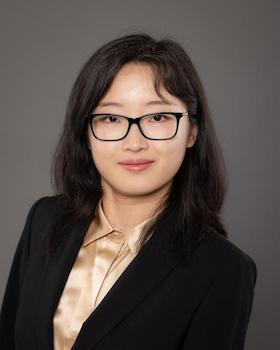
Xinyue Zhang is focusing on the intersection of AI and cybersecurity.
Source: Kennesaw State University
Zhang’s decision to join KSU’s faculty was due to the university’s focus on undergraduate research and its supportive academic environment. She integrated her research into her advanced cryptography classes and remains excited about future technology trends, especially quantum computing, which could transform AI by reducing training times and energy costs, though such advancements may be a decade away.
“Dr. Zhang’s groundbreaking research at the intersection of AI and cybersecurity is not only addressing critical data privacy challenges but also paving the way for more secure and energy-efficient technologies,” said KSU Computer Science Chair and professor Yong Pei. “Her innovative approach to federated learning and NextG networks exemplifies the forward-thinking mindset we value at Kennesaw State University, and her dedication to advancing these fields is truly inspiring.”
Looking ahead, Zhang plans to continue her research and establish a center for AI and privacy at KSU.