
Ransomware attacks are becoming a bigger and bigger threat in the manufacturing automation sector and it is expected to grow even more this coming year.
In trying to defend against ransomware attacks, while phishing remained the top attack approach, weak passwords were one of the most common cybersecurity vulnerabilities in 2019, causing 30 percent of ransomware infections in 2019, according to a report from PreciseSecurity.com.
Phishing scams caused more than 67 percent of ransomware infection globally during the last year, the research found. Another 36 percent of Mail Protection Service users reported ransomware attacks caused by the lack of cybersecurity training. Weak passwords were the third most common reason for ransomware infections globally in 2019.
The 30 percent share in the combined number of ransomware infections during the last years indicates a concerning level of password security awareness. The 2019 Google survey about beliefs and behaviors around online security showed two in three individuals recycle the same password across multiple accounts. More than 50% admitted using one “favorite” password for the majority of the accounts. Only one-third of respondents knew how to define the password manager.

A 2019 Statista survey found 64 percent of U.S. respondents find stolen passwords as the most concerning issue about data privacy. However, such a high level of concern didn’t affect their habits related to keeping track of login information. According to the findings, 43 percent of respondents reported their primary method of keeping track of their most crucial login information was to write it down. Another 45 percent of respondents named memorizing the login data as their primary method of tracking. At the same time, just 12 percent of U.S. online users take advantage of password managers.
Using hard-to-guess passwords represent the first step in securing sensitive online information.
However, according to the UK’s National Cyber Security Centre 2019 survey, password re-use and weak passwords still represent a significant risk for companies and individuals all over the world.
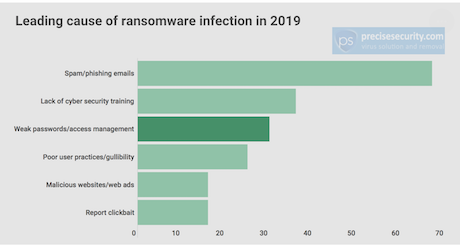
Weak Passwords are the third most common ransomware cause on a global basis.
Source: PreciseSecurity
The breach analysis indicated 23.2 million victim accounts from all parts of the world used 123456 as a password. Another 7.8 million data breach victims chose a 12345678 password. More than 3.5 million people globally picked up the word “password” to protect access to their sensitive information.
Click here for more information on the report.