
Automated penetration testing is crucial for safeguarding digital infrastructure, from enterprise networks to government systems. Traditionally, such testing relies heavily on human experts, making it costly, inconsistent, and slow.
The new system, called CLAP, is a reinforcement learning approach solves these issues by automating and optimizing the testing process, according to researchers from Zhongguancun Laboratory, Zhejiang Lab, the National Research Centre of Parallel Computer Engineering and Technology, Beijing Normal University, and Tsinghua University.
In contrast, CLAP behaves like an experienced city guide, continuously mapping unvisited streets and neighborhoods, effectively identifying risks in areas previously overlooked.

The key outcomes of this research demonstrate CLAP’s significant advantages over existing methods, including a nearly 35 percent reduction in the steps required to identify network vulnerabilities compared to current systems like HDSPI-DQN, HA-DQN, and DUSC-DQN.
Moreover, CLAP assesses much larger networks – up to 500 hosts – far beyond the scale manageable by existing technologies, typically limited to around 100 hosts. Additionally, the diverse testing strategies produced by CLAP enable broader, more thorough security assessments, ensuring comprehensive protection of critical networks.
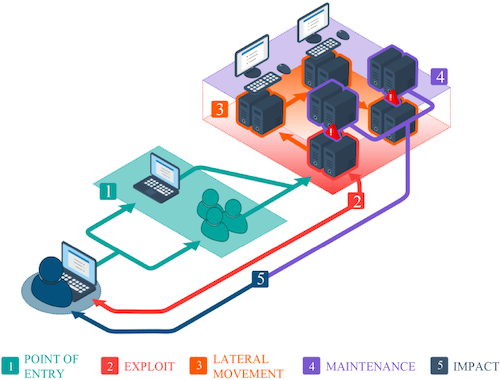
Penetration testing as a sequential decision making process
Source: Yizhou Yang
“CLAP not only underscores the transformative potential of deep reinforcement learning in cybersecurity but also sets a new standard for automated defense systems,” said Prof. Zuoning Chen of National Research Centre of Parallel Computer Engineering and Technology and lead researcher. “We are confident that CLAP will improve how organizations protect their digital assets, driving a paradigm shift in the battle against emerging cyber threats.”
The researchers utilized AI technology, featuring a “coverage mechanism” that mimics expert cybersecurity testers by prioritizing unexplored network areas. Additionally, they introduced the “Chebyshev critic,” enabling diverse and effective testing strategies without manually set parameters.