
These trojans are malicious modifications to a chip’s design that can steal data, weaken security and sabotage systems.
Traditionally, detecting hardware trojans has been an expensive, time-consuming and complicated process. Now, researchers at the University of Missouri created an artificial intelligence-driven method to find these threats faster and more easily than before, said Ripan Kumar Kundu, a doctoral candidate in Mizzou’s College of Engineering.
“That explanation is critical because it saves developers from digging through thousands of lines of code,” Kundu said. “We’re making the process faster, clearer and more trustworthy.”

Flexible Tool
The system is flexible, too. It can run on local machines or through cloud services, making it useful for open-source developers and large companies. It can also end up integrated into chip-design processes across multiple industries, including consumer electronics, healthcare, finance and defense.
Unlike software viruses, hardware trojans cannot end up removed once the manufacturer makes the chip. They go undetected until triggered by an attacker, and the results can be devastating – devices can malfunction, leak sensitive data or even disrupt national defense systems.
Because these chips end up designed and built through a global supply chain, trojans can add in at almost any stage of production, making it difficult to identify them. Mizzou’s approach offers big advantages for the industries involved in this production pipeline. By catching trojans early, companies can avoid the huge financial and reputational damage of discovering them later, which leads to costly recalls of chips or destroyed products.
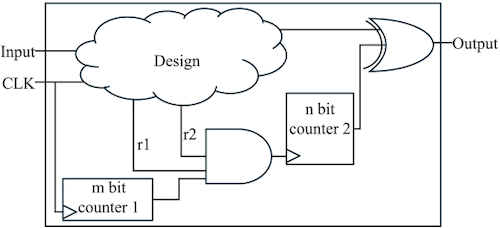
Hardware trojans cannot end up removed once the manufacturer makes the chip. In this case, there is a sample Trojan that applies a hybrid trigger mechanism.
Source: IEEE
“These chips are the foundation of our digital world,” said Khurram Khalil, a doctoral candidate in Mizzou’s College of Engineering and co-author of a study on the subject. “By combining the power of artificial intelligence with an understandable explanation, we’re building tools to protect that foundation at every step of the supply chain.”
Fix Chips in Real Time
The Mizzou team is also developing ways to automatically fix chips in real time, which can help prevent problems before they ever reach production. In addition, researchers see the potential for their method to help secure other critical systems, such as power grids and infrastructure.
The project is detailed in the study: “PEARL: An adaptive and explainable hardware trojan detection using open source and enterprise large language models,” published in IEEE Access.
Click here to read the entire paper.