
Seawater, seaweed and shellfish from Chichester and Langstone harbors underwent analysis in a study by environmental scientists from three universities – Brunel University of London, the University of Portsmouth and Imperial College London – working alongside citizen scientists from the Clean Harbours Partnership, a group looking to clean up worsening water quality.
Their investigation found 105 unique pharmaceuticals, pesticides and illegal drugs were within their samples, and the readings hit a high when wet weather led combined sewer overflows (CSOs) to discharge into the delicate ecosystems.
The findings came a week after the release of Environment Agency data showing that raw sewage released into England’s rivers and seas for a recording-breaking 3.61 million hours last year. But with coastal waters having been studied far less than rivers, the newly published study brings a fresh view of the problem.
The research team and volunteers took 339 samples from 21 spots in the two “Sites of Special Scientific Interest” straddling Hampshire and West Sussex – including sites near Budds Farm, Bosham, Thornham and Chichester sewage treatment works – during the spring and autumn of 2022.

A range of compounds ended up detected in surface water samples, including 67 pharmaceuticals, 29 pesticides and nine recreational drugs, collectively termed contaminants of emerging concern.
Contaminants Slip Through
The contaminants can slip through some wastewater treatment plants any time of year, but the autumn sampling coincided with rainy days which caused CSOs to emit sewage directly into surface waters.
“CSO discharges were an obvious source of chemical pollution in these waters,” said Dr. Thomas Miller from Brunel University of London, who led the study. “Our study found that some chemicals increased by over 100-fold in water after these discharges, making them a high risk to aquatic wildlife.”
Of the pesticides measured, nine were no longer approved for agricultural use, with some banned more than a decade ago. Those chemicals may originate from sources beyond farming or linked to legacy pollution. These findings raise important questions about the long-term environmental impact of these chemicals.
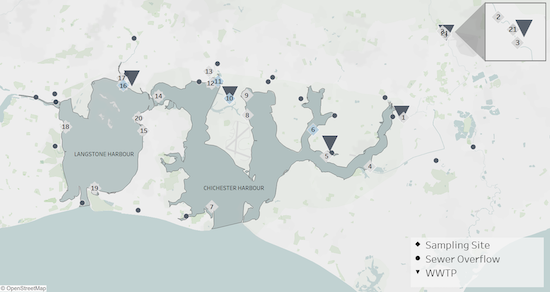
Site map showing sampling locations, sewer overflow spots and wastewater treatment plants (WWTP).
Source: Uhlhorn and team
The study also investigated the exposure of marine life in Langstone Harbor to these chemicals. Generally, seaweed soaked up more chemicals than shellfish.
Imidacloprid was the highest risk based on levels found in surface water, which is an insecticide regularly used on domestic pets in the form of flea and tick medication.
“Out of so many chemicals detected, the presence of pet tick and flea treatments in the harbors was especially concerning. We urgently need to reassess the practice of blanket preventative treatment of our dogs and cats to help bring the risk down,” said Dr. Leon Barron, one of the study’s co-authors undertaking analysis at Imperial College London.
Other compounds of interest included 1,3-diphenylguanidine, used in rubber production and could indicate the input from tire-wear particles and road run-off after rainfall events.
Complex Chemical Mixtures
“The research underscores the complexity of chemical mixtures present in transitional and coastal water systems, highlighting the need for more comprehensive monitoring to investigate their sources, including the impacts of CSO discharges,” said study lead author Jasmin Uhlhorn, a PhD student from Brunel University. “While studies on chemical pollution in these environments remain limited, the findings suggest that the true risks of chemical mixtures likely end up underestimated, particularly for marine species.”
The study was a key output of Project Spotlight, crowdfunded through the University of Portsmouth and Brunel University of London by the Clean Harbours Partnership and its community partners. The overall aim of the project is to reveal what chemical contaminants have an impact on important coastal environments and as a result influence change.
“The impact of these contaminants we are yet to fully understand, but it’s clear from our data that they increase substantially under storm events which discharge untreated sewage,” said Professor Alex Ford, from the University of Portsmouth’s Institute of Marine Sciences, and research lead on Project Spotlight. “Having the team at the Clean Harbors Partnership gave us a unique opportunity to use citizen scientists to be proactive and reactive in helping us monitor a large number of locations simultaneously.”
“Our vision for CHP was to shed a spotlight on the human pressures impacting our precious harbors,” said CHP co-founder, Rob Bailey. “However, it is concerning to see such a large cocktail of chemicals detected and hear their effects are largely unknown. As a community based organization we will continue to push for better monitoring of these protected marine habitats used by our members.”