
At 10:04 a.m. on November 13, 2020, a graphite heat exchanger cracked, releasing HCI at the Wacker plant during maintenance activities. The initial release caused chemical burns to one contract worker, while one worker died and two others received injuries when they fell from an elevated structure while attempting to escape the release.
The following is an update from the Chemical Safety Board (CSB) regarding the ongoing investigation into the incident.
HCI Exposure
HCl is corrosive and can cause serious injuries to people in the event of a release. HCl exposure can cause damage to the eyes, skin, and mucous membranes. When inhaled, HCl can cause inflammation of the respiratory tract and buildup of fluid in the lungs. Skin exposure can cause severe burns, ulceration, and scarring.

During the night shift on November 12, 2020, Wacker operators restarted the HCl regeneration unit after it had been shut down for required repairs and routine maintenance. By 7 a.m. on November 13, the unit reached normal operating conditions.
At 8 a.m., Wacker issued a work permit to Jake Marshall LLC (“Jake Marshall”), a contract pipefitting company, to “hot torque AW234.” AW234 is a graphite heat exchanger used in the HCl regeneration process and is located on the fifth floor of the five-story structure.
Jake Marshall was tasked with checking the torque on all of the bolts on the heat exchanger vapor outlet piping. Earlier in the week, the piping was re-installed after maintenance work on the heat exchanger was performed. To complete the torque check, Jake Marshall employees planned to use a click type torque wrench that would “click” with both an audible and tactile response when they reached the desired torque.
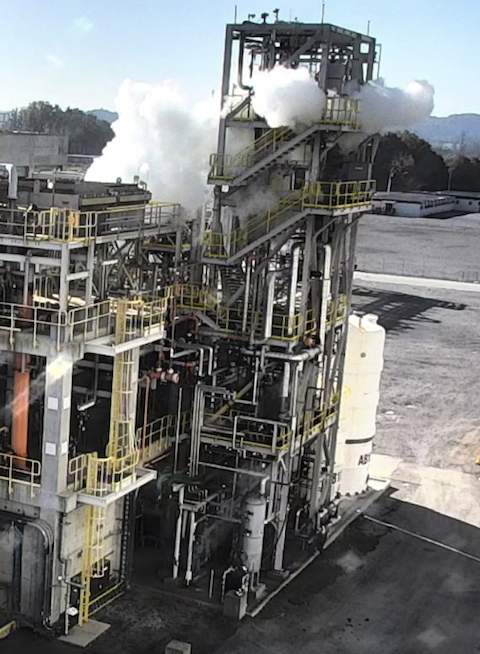
Image of HCl Release. Image taken during the release of HCl.
Source: Wacker
At 8:24 a.m., Wacker issued a work permit to Pen Gulf Inc. (“Pen Gulf”), an insulation and scaffolding company, to perform a separate task to repair insulation on equipment near the heat exchanger.
The scope of work for Jake Marshall and Pen Gulf authorized the contract employees to be on the fifth floor of the structure. There were three Jake Marshall and four Pen Gulf employees working on the platform at the time of the incident. One Jake Marshall employee was working on the north end of the platform. The two other Jake Marshall employees and all four Pen Gulf Employees were working on the south end of the platform.
Jake Marshall employees wore full-body chemical resistant suits, rubber boots and gloves, and full-face respirators with acid-gas cartridges. Pen Gulf employees were wearing flame-resistant clothing, steel-toe safety boots, and hard hats.
Loss of Containment
Just after 10 a.m., as a Jake Marshall employee was checking the torque on the blue-colored bolts, a loss of containment occurred, resulting in an HCl release.
The 5th floor platform was equipped with a single staircase for access and egress. No other mode of egress was present.
When the Jake Marshall employee attempted to move away from the release, his chemical suit became entangled and tore open. The tear allowed HCl to get inside the suit, injuring the employee (chemical burns). Due to poor visibility on the platform as a result of the release, the employee was unable to go to the single staircase to exit the platform. The employee was able to go to the south side of the platform where the other Jake Marshall and Pen Gulf employees were working.
The location of the release and resulting lack of visibility prevented all of the workers from being able to access the single staircase to exit the platform.
To escape from the release, three of the four Pen Gulf employees began climbing down piping on the side of the structure. While climbing down, all three employees fell to the ground. One employee was fatally injured from the fall and two sustained serious injuries.
After the release stopped, the three Jake Marshall employees and one Pen Gulf employee used the staircase to evacuate the area and reach the ground.
After the incident, the CSB oversaw a leak test on the heat exchanger involved in the incident. The test identified a leak on the exchanger vapor outlet nozzle. The leak was under a carbon steel ring connected to the bolts the Jake Marshall employee was torque checking.
The heat exchanger vapor outlet nozzle was constructed of graphite. The vapor outlet piping was constructed of Resistoflex brand Polytetrafluoroethylene (PTFE) lined carbon steel pipe manufactured by Crane ChemPharma & Energy.
Torque Recommendations
For exchanger-to-piping connections, the manufacturer of the heat exchanger states the recommended bolt torque is 15-foot pounds (ft-lbs).
For piping-to-piping connections, the Resistoflex manual specifies the minimum required torque is 40 ft-lbs.
A Jake Marshall employee reported on the day of the incident, the torque wrench used to torque the bolts was set to 40 ft-lbs.
In its ongoing investigation while no conclusions have been drawn, the CSB is continuing to gather facts and analyze several key areas, including:
- Failure analysis of the heat exchanger vapor outlet nozzle
- Wacker safety and work management systems, including:
— Mechanical integrity
— Maintenance work management
— Equipment design
— Personal protective equipment requirements
— Training