
While technology can help boost a facility’s efficiency, it also boosts dependence on digital technology – increasing the attack surface to cyber threats that can interrupt operations and compromise safety.
To that end, research is underway to work on the challenge of protecting processing facilities from cyber threats through a newly established framework, which highlights current problems and outlines proposed solutions. Dr. Faisal Khan, department head of the Artie McFerrin Department of Chemical Engineering and Director of the Mary Kay O’Connor Process Safety Center (MKOPSC) at Texas A&M University, is leading the research.
“Our goal was to create a framework that identifies vulnerabilities, detects abnormal activity in real-time, and provides safeguards and mitigation strategies that enable the system to absorb changes introduced by an intruder while maintaining safe and resilient plant operations,” Khan said.

Threats in OT Environment
Researchers recognized most threats to industrial control systems originate from the operation technology environment, which monitors and controls physical devices and processes using hardware and software. If a cyberattack breaches this environment, the plant’s productivity and safety remain at risk.
Ensuring processing facilities and their critical infrastructures are safe from cyber threats protects surrounding areas from fuel shortages, power outages and water supply contamination.
Functions of day-to-day life rely heavily on processing facilities, and a cyberattack on a plant can cause chaos in the affected areas. To prevent these incidents, researchers emphasized the importance of real-time detection and deflection of cyber threats.
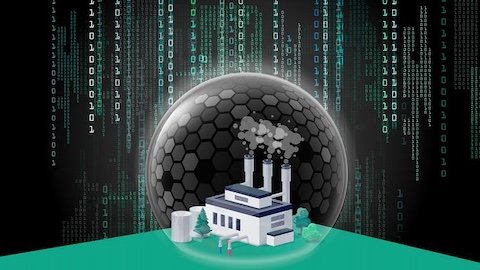
Most threats to industrial control systems originate from the operation technology environment, which monitors and controls physical devices and processes using hardware and software. If a cyberattack breaches this environment, the plant’s productivity and safety remain at risk.
Source: Rachel Barton/Texas A&M Engineering
“Industrial control systems were not designed for cybersecurity, so safeguarding them takes more than blocking access,” said Dr. Rajeevan Arunthavanathan, a former post-doctoral researcher at MKOPSC and current assistant professor at the University of Regina, Canada. “Our framework keeps plants safe with real-time detection, mitigation and digital twins that test changes before they cause harm.”
Researchers hope to further prepare their framework for practical use in real industrial environments. Additionally, the team plans to explore how early detection methods from IT systems can effectively integrate with digital twin solutions. This move could support rapid response during cyberattacks and serve as a pilot laboratory environment where unknown threats can end up tested safely before they affect actual operations.
Safety and Security Issue
“Cybersecurity is no longer just an IT issue; it is a safety issue for the entire process industry, Khan said. “This work provides a roadmap for industries to strengthen resilience in their operations, protect communities, and ensure that the critical services people depend on remain reliable even under cyber threat.”
This framework’s development reflects a truly collaborative initiative of Texas A&M researchers, with each contributor bringing unique expertise to the complex issue of cybersecurity.
Click here to view the paper.