
Also, no one can deny these attacks could have severe consequences, ranging from disrupting water treatment plants to threatening public safety. Traditional cybersecurity measures, while effective against known threats, struggle to detect and respond to new and sophisticated cyberattacks.
As a result, there is an urgent need for advanced cybersecurity systems that can detect subtle anomalies and protect these critical infrastructures.
Researchers applied a combination of long short-term memory (LSTM) networks, known for their effectiveness in time-series analysis, and traditional models such as Random Forest (RF), Support Vector Machine (SVM), and K-Nearest Neighbor (KNN).

These models were able to classify and detect potential cyber threats by analyzing data from 51 sensors and actuators.
“Our work addresses a crucial gap in the cybersecurity landscape for ICSs by developing a robust model that identifies cyberattacks in real-time,” said Shadi Jaradat from the University of Queensland and one of the researchers involved in the study.
Key findings from the study include:
- LSTM network superiority: The LSTM model achieved an overall accuracy of 98.02 percent, outperforming traditional models like SVM (82.8 percent) and KNN (93 percent). It also delivered high precision (97 percent), recall (98 percent), and F1 score (97 percent) in detecting cyberattacks.
- Advanced preprocessing: The team implemented sophisticated preprocessing techniques, including data labeling automation, feature scaling, and class imbalance correction, ensuring the models performed optimally on the SWaT dataset.
- Feature importance analysis: Insights from the analysis identified key sensors and actuators critical for cybersecurity, allowing for better prioritization in real-world applications.
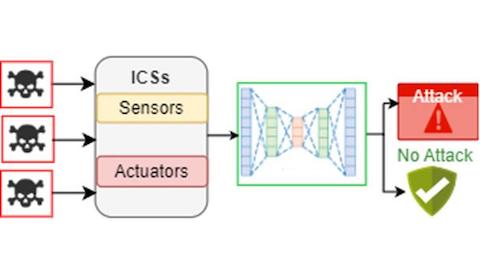
LSTM networks can capture complex temporal dependency patterns. This is important in enhancing the resilience of critical infrastructure, especially in environments where real-time detection and response are crucial for maintaining operational integrity.
Source: Shadi Jaradat/University of Queensland
The study demonstrates the effectiveness of LSTM networks in safeguarding industrial control systems from cyberattacks by capturing complex time-dependent patterns that traditional methods often miss. This research is a significant step toward enhancing the resilience of critical infrastructure, particularly in environments where real-time detection and response are essential for maintaining operational integrity.
“Machine learning models, especially LSTM networks, are proving to be invaluable tools in the fight against cyber threats targeting industrial control systems,” Jaradat said. “Our study not only improves cybersecurity for water treatment plants but also sets the stage for similar advancements across various critical sectors.”
This study opens new pathways for research in industrial cybersecurity.
The integration of advanced AI techniques like LSTM with real-time data processing capabilities offers a blueprint for future systems. Further research could explore hybrid models that combine the strengths of different machine learning techniques and extend this approach to other critical infrastructure sectors.