
In an offshore environment that alert may seem obvious, but the reality is it is a dynamic workplace that can present challenging and potentially dangerous working conditions that require constant situational awareness, said officials at the Bureau of Safety and Environmental Enforcement (BSEE).
An incident ended up reported to BSEE involving a worker who fell through an open hatch cover on the blowout preventer platform that had been removed due to damage. The worker sustained injuries to his leg and knee.
Multiple factors contributed to the incident, including a lack of situational awareness for potential hazards, inadequate fall protection measures, and the failure to 1) properly secure the hatch covering the hole, 2) take corrective action after the cover was removed, and 3) alert other personnel to the hazard.

In the end, BSEE recommends operators and contractors consider doing the following:
- Check your surroundings prior to starting work for any potential hazards.
- Identify and document hazards and then communicate these to all personnel.
- Ensure using the proper fall protection when working at heights.
- Check temporary equipment and work platforms for hazards prior to use.
- Utilize a spotter to help identify and communicate any hazards when working at heights.
- Install barricades and flag areas with questionable walking or working surfaces. Soft barricades (e.g., caution tape) may temporarily end up used, but you should install hard barricades.
- Ensure ladders that connect decks have safety gates that swing closed when not held open.
- Remind personnel to stay vigilant of their surroundings when working on or near elevated work platforms.
- Remind personnel to work at a pace that allows for continual reassessment of dynamically changing work environments.
- Follow approved procedures for the work being performed and outlined in the job safety analysis.
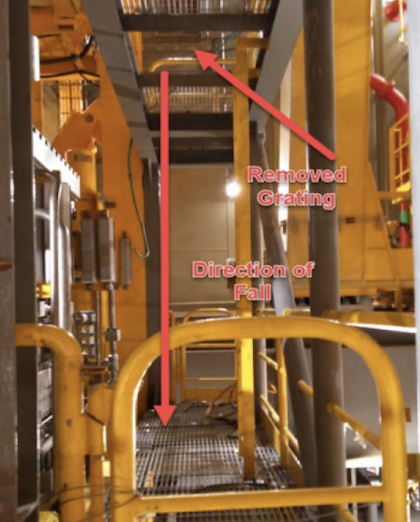
A worker fell through an open hatch cover on an offshore platform, which led to an injury.
Source: BSEE