
The hidden costs of ransomware is a part of a report by Check Point Research (CPR), in cooperation with Kovrr. The researcher looked into the ransomware economy to uncover the situation from the point of view of the cybercriminal gangs and victim organizations.
CPR looked at the recent Conti Leaks, showing how ransomware gangs are alarmingly similar to legitimate organizations with clear management structures and HR policies.
Organizations are just now waking up to the threat of ransomware and creating a clear response and mitigation plan.

The report also found the duration of ransomware attacks is reducing as a result.
However, cybercriminals will always be upping their game and finding new ways to wreak havoc, according to the report
CPR has monitored a 24 percent increase in ransomware attacks year-over-year to organizations globally. The weekly average of impacted organizations stands at one in 53, versus one in 66 in the same period of 2021.
Over the years, cybercriminals have perfected their processes in defining extortion demands and developed sophisticated techniques for negotiation with victims, with the aim of exacting the maximum level of ransom payment the victim organization can afford.
In order to show a true picture of the two sides of ransomware, i.e. from the victims’ and the criminals’ perspective, CPR used the information sources below in order to gain monetary insights for this research:
- Victims’ losses – Kovrr’s cyber incidents database includes data about past cyber incidents and their financial impact.
- Cybercriminals’ profits – information from Conti Leaks as a representative example of the cybercriminals’ monetary dynamics.
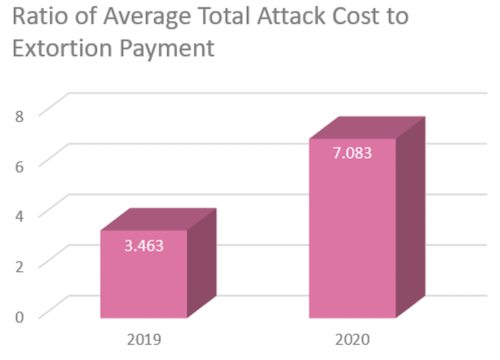
The ratio between the average total cost of an attack and the average ransom payment during 2019-2020.
Source Check Point Research
CPR found while the starting point for ransomware financial dynamics is usually based on the victim’s annual revenues, all other financial dealings could vary, depending on many factors.
The research showed how cybercriminals define the initial ransom demand and shows the ground rules for a successful ransomware negotiation from the criminal’s point of view:
- Accurate estimation of the victim’s financial position
- Quality of data exfiltrated from the victim
- The reputation of the ransomware group
- Whether or not the victim has cyber-insurance
- The approach and interests of victims’ negotiators
The duration of a ransomware attack (from initial attack to resumption of normal business) dropped to an average of 9.9 days in 2021 after steadily climbing between 2017 and 2020 to a peak average of 15 days.
Also, the year 2020 showed the average cost of a ransomware attack was more than seven times higher than the average ransom paid.
Click here for more on the CPR report.