
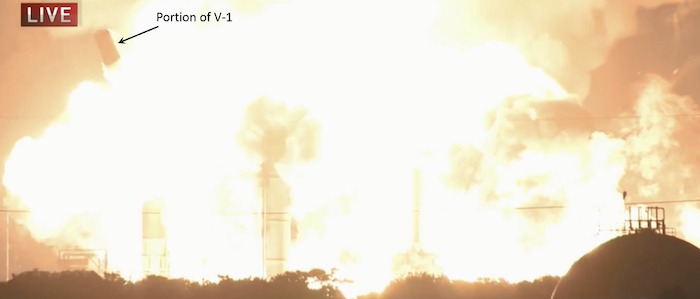
During the incident, over 5,000 pounds of highly toxic hydrofluoric acid (HF) released, a 38,000-pound vessel fragment launched off-site and landed on the other side of the Schuylkill River, and an estimated property damage loss of $750 million resulted. Five workers and a firefighter experienced minor injuries during the incident and response.
“This is one of the largest refinery disasters worldwide in decades in terms of cost,” said Chemical Safety and Hazard Investigation Board (CSB) Interim Executive Authority Steve Owens. “The local community in Philadelphia fortunately was not seriously harmed, but given the refinery’s location, it could have been much worse. This incident should be a wake-up call to industry to prevent a similar event from occurring in the future.”
The CSB’s investigation identified several safety issues which contributed to the disaster:

- Mechanical integrity: The CSB determined the pipe elbow that failed had corroded faster than other piping in the HF alkylation unit. That is because the steel pipe elbow contained a higher content of nickel and copper than other piping in the unit.
- Verifying safety of equipment after changes to good practice guidance: When the pipe elbow was initially installed in 1973, the standard set by American Society for Testing and Materials (ASTM) for carbon steel piping did not specify limits on nickel or copper content. Over the next decades that standard changed, and by 1995, the ASTM standard had been revised enough the pipe elbow no longer met ASTM’s requirements due to the elbow’s high levels of nickel and copper.
“A comprehensive evaluation of unit piping never occurred despite regulations from both the Occupational Safety and Health Administration (OSHA) and the Environmental Protection Agency (EPA) requiring companies to determine that their equipment is safe to operate after industry standards are updated,” said CSB Supervisory Investigator Lauren Grim. “To prevent catastrophic incidents, companies and industry trade groups must ensure process safety when new knowledge on hazards is published.” - Remotely operated emergency isolation valves: The CSB found there were no remotely operated emergency isolation valves installed in the HF alkylation unit to isolate nearby hydrocarbon sources that could then flow through the failed elbow. Although these valves are not explicitly required by the current American Petroleum Institute (API) standard on Safe Operation of Hydrofluoric Acid Alkylation Units, if PES had installed such valves, the release from the pipe elbow could have been minimized and the subsequent explosions could have been prevented. As a result, the CSB is recommending to API to update its standard on Safe Operation of Hydrofluoric Acid Alkylation Units to require installation of remotely operated emergency isolation valves on the inlets and outlets of all hydrofluoric acid containing vessels, and any hydrocarbon containing vessels meeting defined threshold quantities.
- Safeguard reliability in HF alkylation units: On the day of the incident, pumps designed to spray large volumes of water to suppress an HF release failed to activate early in the incident as the elements to remotely operate the pumps were damaged by the fire and explosions. Forty minutes elapsed from the time the release began before a worker was able to manually turn on a water pump. In the meantime, highly toxic HF escaped from equipment and vaporized into the air. As a result, the CSB is recommending to API to update its standard on Safe Operation of Hydrofluoric Acid Alkylation Units to require critical safeguards and associated control system components be protected from fire and explosion hazards, including radiant heat and flying projectiles.
- Inherently safer design: Of the 155 U.S. petroleum refineries currently in operation in the United States, 46 operate HF alkylation units. Hydrofluoric acid is highly toxic and is one of the eight most hazardous chemicals regulated by EPA’s Risk Management Program (RMP). Alternative alkylation technologies have been developed, such as a solid acid catalyst and new ionic liquid acid catalyst alkylation technology. Replacing highly toxic chemicals with less hazardous chemicals is an “inherently safer design” approach. Additionally, some refinery alkylation units use sulfuric acid as a catalyst instead of HF. Although sulfuric acid is highly corrosive and can cause skin burns upon contact, it remains a liquid upon release and does not present the same risk to surrounding communities as HF, which vaporizes upon release and has the potential to travel offsite.

Massive fire burned at the Philadelphia Energy Solutions refinery. The blaze ended up extinguished one day later.
Source: Reuters
The CSB’s investigation found there is no federal regulatory requirement for refineries to analyze inherently safer design strategies to reduce the risk of serious accidental releases. Technologies are being developed that could be safer alternatives to HF alkylation, and refiners should periodically evaluate these available alkylation technologies.
CSB recommended the EPA:
- Require petroleum refineries to conduct a safer technology and alternatives analysis (STAA) as part of their Process Hazard Analysis under EPA’s RMP rule, and evaluate the practicability of any inherently safer technology
- Initiate prioritization under the Toxic Substances Control Act (TSCA) to evaluate whether hydrofluoric acid is a high priority substance for risk evaluation, and if it is, conduct a TSCA risk evaluation of HF and implement any identified risk mitigation requirements.
“The CSB wants to make sure that regulators are requiring companies to explore, determine and utilize the safest technology available,” said board member Sylvia Johnson. “Understanding and mitigating the risk of using highly toxic chemicals such as HF is good for communities, workers, and industry.”