
Yenkin-Majestic’s multiple levels of failure including basic pressure vessel integrity quality assurance practices, not installing effective warning alarms, not adequately training its employees, not requiring employees to wear flame-resistant clothing, and not having adequate emergency response preparations in place led to the April 8, 2021 explosion and fire that killed Wendell Light and left eight others severely injured, according to the final report from the Chemical Safety and Hazard Investigation Board (CSB).
At 12:02 a.m., a mixture of flammable naphtha solvent vapors and resin liquid became pressurized and then released through the seal of a closed manway of an operating kettle at the Yenkin-Majestic Paint Corporation (Yenkin-Majestic) OPC Polymers resin plant in Columbus.
Vapor Spread
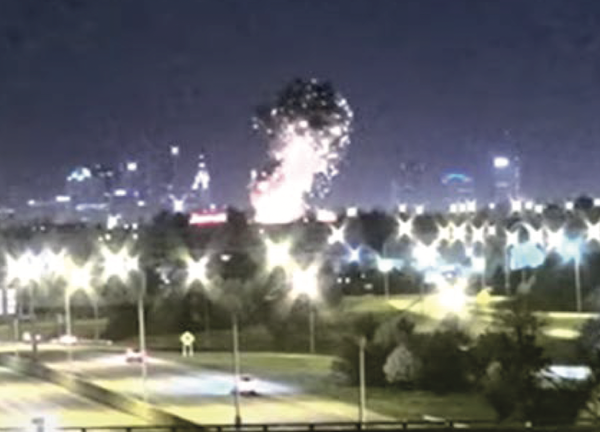
The naphtha vapor spread throughout the enclosed building and formed a flammable vapor cloud inside and outside the building. Two minutes later, at 12:04 a.m., the flammable vapor cloud found an ignition source, and there was an explosion, which ignited additional flammable material, resulting in a fire that took 11 hours to extinguish.
The incident damaged buildings on the Yenkin-Majestic site and caused a fire in a commercial property adjacent to the site.

Light died from thermal injuries and inhaling products of combustion. Rescue workers found him partially covered by rubble inside the second floor of the resin plant. Eight other employees ended up rushed to area hospitals for injuries suffered during the explosion and building collapse, including third-degree burns and limb fractures, with one employee requiring a leg amputation when collapsed debris crushed him.
In addition, firefighting water runoff entered the nearby Alum Creek through a storm drain. The Ohio Environmental Protection Agency (Ohio EPA) reported it observed offsite impacts from this incident.
Yenkin-Majestic estimated its total property damage from the accident at over $90 million and demolished the severely damaged resin plant after the incident.
During its investigation, the CSB found three major safety issues:
Mechanical integrity of low-pressure vessels:
Yenkin-Majestic did not adequately ensure the mechanical integrity of a new 20-inch manway installed on a process vessel (Kettle 3) three months before the incident. Kettle 3 normally operated at or near atmospheric pressure but occasionally built pressure up to 15 pounds per square inch gauge (psig) during some upset conditions.

Vapor cloud just before the explosion.
Source: Yenkin-Majestic
After they added the new manway, Yenkin-Majestic performed a leak check-up to 4 psig and allowed Kettle 3 to continue operating for three months until the incident. On the day of the incident, Kettle 3’s new manway did not withstand more than 9 psig of pressure during a process upset and leaked hot resin and flammable solvent vapor into the facility.
The CSB determined Yenkin-Majestic did not follow basic quality assurance practices, such as adequately pressure testing equipment after alterations, which led to this release. In addition, Yenkin-Majestic had taken the position Kettle 3 was exempt from pressure vessel regulation based on its process safety information documenting it would not exceed 15 psig.
Although pressure vessels that can operate over 15 psig are subject to pressure vessel safety codes, there is little guidance specifically for the design, construction, and alteration of pressure vessels not exceeding 15 psig.
Safeguard selection and the hierarchy of controls:
The hierarchy of controls is a risk management principle based on ranking hazard controls from most effective to least effective.
On the day of the incident, the system design allowed an operator to add solvent to the hot-resin-filled kettle while – unknown to the operator – the agitator (which mixed the liquids in the kettle) was off.
The subsequent activation of the agitator caused the liquid solvent to rapidly vaporize as it made contact with the hot resin, leading to the pressure increase in the kettle and the subsequent release through the closed manway.
Yenkin-Majestic had not installed or configured interlocks to prevent solvent addition to the kettle when the agitator was off during normal batch operations and relied upon computer panel status indicators, that ended up not equipped with alarms, to communicate the agitator status to the operator. Although administrative controls are essential for reducing risk, they depend on human actions, perception, and judgment.
Emergency preparedness:
Yenkin-Majestic did not have adequate mitigative safeguards to minimize the consequences of the incident. For example, Yenkin-Majestic did not effectively utilize flammable gas detection systems and associated alarms to audibly notify onsite personnel of a hazardous gas release and the need to evacuate.
During the incident, some of the gas monitors installed within the Yenkin-Majestic facility detected the flammable solvent release approximately one minute after the release began and sent an email to an offsite employee, but the monitors did not sound audible alarms to warn employees of the hazard.
On top of that, Yenkin-Majestic did not specifically train its employees to recognize and respond to the presence of a flammable solvent vapor cloud and its associated hazards.
During the incident, this overall lack of hazard recognition led to some personnel approaching the hazardous gas to investigate the release instead of initiating a plant-wide evacuation.
Finally, Yenkin-Majestic allowed resin plant operators to wear cotton short-sleeved shirts while working in proximity to flammable materials unless they were performing specific tasks.
Cause of the Incident
CSB determined the cause of the fatal explosion and fire was the release of flammable solvent vapor through the seal of a closed reactor manway not designed, constructed, or pressure tested to a design pressure appropriate for the process. The release through the closed manway occurred after the reactor became pressurized by the rapid vaporization of solvent when the reactor’s agitator turned on.
Contributing to the incident was Yenkin-Majestic’s failure to adhere to basic pressure vessel integrity quality assurance practices, as well as the absence of clear industry guidance specifically for the design, construction, and alteration of pressure vessels in highly hazardous chemicals service not exceeding 15 psig. Also contributing to the incident was the absence of engineering controls to prevent the incident sequence and the failure of Yenkin-Majestic’s administrative controls (overreliance on operator actions).
Contributing to the severity of the incident was Yenkin-Majestic’s inadequate emergency preparedness, which led to a lack of a timely evacuation of all employees from the resin plant, lack of audible alarms to alert employees to the presence of flammable vapor concentrations in the resin plant, and a lack of flame-resistant uniforms to protect employees from fire hazards.
Timeline to the Release
The incident, the CSB said in the report, occurred during the night shift toward the end of Kettle 3’s operating sequence, which had been progressing normally. At the time of the incident, there were 12 employees in the resin plant, five employees in the adjacent paint plant, and three maintenance technicians supporting both plants.
Employee A was the operator overseeing the Kettle 3 batch operation in the resin plant. At 10:19 p.m., Employee A departed the kettle room to review sample results at the laboratory. While he was gone from the kettle room, at 10:22 p.m. the Kettle 3 agitator unexpectedly shut down. Employee A returned at 10:25 p.m. and did not realize the agitator shut down while he was away; no alarms were active at the time to indicate a process abnormality, either.
At 10:33 p.m., with the batch temperature at 455 °F, Employee A pushed the control system’s “Batch Done” button to begin cooling the kettle’s contents. Meanwhile, at this point in the procedure, the Kettle 3 agitator should have been running, but unknown to Employee A, it remained stopped.

Kettle 3 shown during demolition.
Source: CSB
At 11:06 p.m., Employee A began adding varnish maker and painter’s naphtha (VM&P) into the kettle through the spray heads at the top of the kettle. According to the solvent flow totalizer data, about 300 gallons of solvent flowed into the kettle at a steady rate over about 26 minutes, from 11:06 p.m. to 11:32 p.m. Control system records showed the batch temperature measured inside the kettle during this time was about 430 °F, while the temperature of the solvent being added was 70 °F. Employee A finished adding the solvent to Kettle 3, and he waited for the kettle temperature to cool down to less than 325 °F.
Around midnight, about 90 minutes after Employee A pushed the Batch Done button, the kettle temperature was recorded as 424 °F – about 100 °F higher than he expected after 90 minutes of cooling. At this time, Employee A began to investigate potential causes for this process abnormality. He looked into the kettle through the glass window of the manway and noticed for the first time that the agitator was off (not turning). The worker then checked the HMI screens to confirm that it was off. He later said he did not know why or when it had turned off; however, knowing the agitator was supposed to stay on for the duration of a batch, he turned it back on at 12:02 a.m.
Stagnant Mix
While the agitator was off, the solvent and the hot resin were not mixing and remained mostly separated. When the agitator began mixing the kettle’s stagnant layers at 12:02 a.m., the liquid solvent began to vaporize, increasing the pressure inside the kettle from approximately 0 to 4 psig in 15 seconds.
The pressure continued to increase even after triggering the kettle’s high-pressure alarm and safety interlock. Two seconds later, when the kettle’s pressure reached approximately 9 psig, Kettle 3’s closed manway could no longer contain the pressure and began to release a mixture of hot resin liquid and flammable solvent vapor through the sealing surface around its lid into the kettle room.
At this point, Kettle 3’s pressure was still below the rupture disk’s marked burst pressure, so it did not relieve Kettle 3’s pressure.
Within seconds, the entire room filled with white vapor, obscuring visibility. Employee A ended up sprayed by the hot material and could smell what he later identified as flammable VM&P naphtha inside the room.
Employee A said after the flammable release started, he tried to reverse his actions and turn off the agitator, but he could not see through the white vapor and had difficulty breathing. He tried to hit the emergency-stop button with his eyes closed, but he was not able to reach it. About 20 seconds after the release started, Employee A evacuated from the kettle room.
Stricken Worker Helped
Employee B, who was in a nearby kettle room, saw Employee A screaming in pain and helped him evacuate from the building. Surveillance cameras show Employees A and B emerging from the resin plant at 12:03:50 a.m., about 80 seconds after the release began, and approximately 30 seconds before the explosion.
The agitator continued stirring the contents of Kettle 3, and the pressure inside the kettle peaked at 18 psig, according to control system records. At this peak pressure, Kettle 3’s pressure was above the rupture disk’s marked pressure setting but still within its burst tolerance range, and it did not burst to relieve Kettle 3’s pressure. Flammable solvent vapor continued leaking from the manway sealing surface, and over the next minute after the pressure peak, the kettle’s pressure gradually decreased to less than 1 psig.
Employees inside or near the resin plant were not aware of the dangerous situation. For instance, at 12:03:30 a.m., an employee saw the white vapor from the outside of the building and began running into the resin plant to investigate what he thought was a steam leak. According to witness accounts, no one used the resin plant’s intercom communication system to call for an evacuation or otherwise warn workers of the imminent danger.
Post-incident, Yenkin-Majestic also confirmed the fire alarm system had not been activated to warn workers to evacuate prior to the explosion.
Recommendations
CSB made a series of recommendations to various organizations:
To Yenkin-Majestic
- Update mechanical integrity procedures for all process vessels in highly hazardous chemicals service, including pressure vessels not exceeding 15 psig, to adopt alteration guidance in API 510 Pressure Vessel Inspection Code or Part 3 of the National Board Inspection Code.
- Assess and document applicable design, construction, and alteration standards for all pressure vessels in highly hazardous chemicals service in new resin plant designs, including pressure vessels not exceeding 15 psig.
- Demonstrate the use of prevention through design using the hierarchy of controls in future resin plant designs. Specifically, prioritize inherently safer design and engineering controls to prevent process safety events.
- Identify and document all equipment that could release flammable materials and install LEL detectors in accordance with sources and guidance. Ensure detection of hazardous conditions automatically triggers visual and audible alarms to alert plant personnel of the hazard. Develop and implement employee training on actions to take, such as prompt evacuation, when such alarms activate.
- Develop and implement requirements for personnel to wear flame-resistant uniforms in all operating areas that process flammable chemicals. Update employee training material to include the requirement for and purpose of PPE use.
To the American Petroleum Institute (API)
- Develop specific design, construction, and alteration guidance for low-pressure process vessels in flammable and other highly hazardous chemicals service not exceeding an internal pressure of 15 psig in API 510 Pressure Vessel Inspection Code, API RP 572 Inspection Practices for Pressure Vessels, and/or other appropriate products. At a minimum, include guidance for:
— Determining and documenting the low-pressure vessel’s design pressure
— Determining when or if all or parts of the ASME Boiler and Pressure Vessel Code should be applied
— Acceptable alternative engineering methods
— Alteration requirements, such as design assessments, inspections, and pressure testing
To American Society of Mechanical Engineers (ASME)
- Assist API in developing design, construction, and alteration guidance for low-pressure vessels in flammable and other highly hazardous chemicals service not exceeding an internal pressure of 15 psig.
Click here to view the entire CSB report.