
The new technique, based on liquid-solid extraction and advanced mass spectrometry, identified 75 emerging contaminants across seven chemical classes, including substances never before detected in WEEE.
“The contaminants we identified – some at surprisingly high levels – could pose long-term risks if not properly managed,” said Dr. Alexandros G. Asimakopoulos from the Norwegian University of Science and Technology (NTNU) and part of the study team.
Notably, researchers discovered Bisphenol A, an endocrine-disrupting compound, at concentrations exceeding 40 µg/g in certain e-waste plastic samples, raising concerns over recycled materials entering the consumer market, while anaerobic digestion in wastewater treatment plants removed up to 89 percent of contaminant concentrations from sewage sludge.

Besides shedding light on under-researched pollutants in e-waste, the study addresses regulatory and safety gaps in managing waste streams.
According to lead author Dr. Daniel Gutiérrez-Martín, the findings can help design better monitoring tools and inform treatment strategies in line with circular economy goals.
“Our methodology also demonstrated reliable performance despite the chemical complexity of the materials, opening possibilities for extending the approach to other problematic waste types like food packaging or industrial sludge,” Gutiérrez-Martín said.
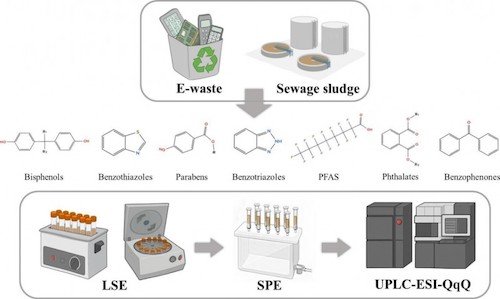
This visual summarizes the two complex waste matrices investigated (sewage sludge and e-waste), the seven targeted chemical families and the analytical methodology used.
Source: Environmental Chemistry and Ecotoxicology
The study, supported by the Norwegian Research Council through the SLUDGEFFECT project, comes at a critical time when global e-waste generation is rising rapidly and effective monitoring tools are essential for sustainable waste reuse.
Click here for more on the study.