
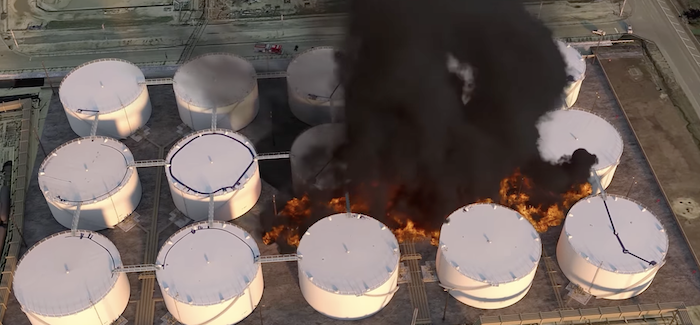
To emphasize that point the Chemical Safety and Hazard Investigation Board (CSB) released an important safety video, entitled “RIPE for Change” based on its 2024 safety study “Remote Isolation of Process Equipment,” (R.I.P.E.).
“The CSB has investigated a number of serious incidents in recent years, including the one at TPC where the consequences escalated due to the lack of remote isolation equipment,” said Steve Owens, CSB chairperson. “These incidents resulted in fatalities , serious injuries and severe damage to chemical facilities in nearby communities.”
- A massive March 2019 fire at the Intercontinental Terminals Company (ITC) bulk liquid storage terminal in Deer Park, Texas
- The catastrophic June 2019 fire and explosions at the Philadelphia Energy Solutions (PES) refinery in Philadelphia, Pennsylvania
- A major November 2019 fire and explosions at the TPC Group chemical plant in Port Neches, Texas.
In their investigations, the CSB found in all three incidents, fires burned for extended periods of time – from several days to over a month – in part because the facilities did not have remote isolation equipment to safely stop the flow of the hazardous materials fueling the fires.

Manual Control
Instead, all three facilities relied solely on manual or locally controlled valves facility personnel could not access safely during the dangerous incidents.
“Although good industry guidance on the remote isolation of process equipment has been available for many years, the guidance has not been consistently followed,” said CSB Director of Recommendations, Charles Barbee. “Therefore, the CSB believes that both industry standards and federal regulations should require the use of remote isolation equipment, where appropriate, to help prevent and/or mitigate the consequences of such highly destructive and dangerous events.”
After investigating the incidents and conducting the study, the CSB issued three safety recommendations and reiterated them in the video. They made recommendations to the American Petroleum Institute (API), the Environmental Protection Agency (EPA), and the Occupational Safety and Health Administration (OSHA).
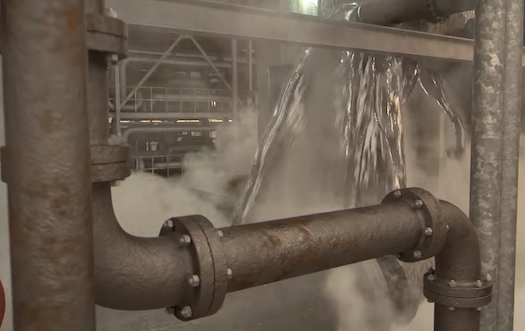
Video shows after a pipe burst it led to an explosion at the TPC Group chemical plant in Port Neches, Texas.
Source: CSB
These recommendations could ensure remote isolation capabilities are in place to prevent the escalation of releases of hazardous materials:
- American Petroleum Institute: Revise its industry guidance documents to apply to more facility types beyond refineries and include requirements for remote isolation devices should for when they should end up automatically activated or remotely activated from a safe location, for processes involving highly flammable or toxic materials and atmospheric storage tanks.
- Environmental Protection Agency: Incorporate requirements for an evaluation of the need for remote isolation capabilities into its Risk Management Program (RMP) Rule, which regulates processes involving highly flammable or toxic materials.
- Occupational Safety and Health Administration (OSHA): Include requirements for an evaluation of the need for remote isolation capabilities into its Process Safety Management (PSM) standard, which regulates processes involving highly hazardous chemicals.
Improve Standards
The study went on to say the API should improve existing voluntary standards by establishing criteria for various facility types including petroleum refineries as well as chemical petrochemical facilities with major process equipment and atmospheric storage tanks, that details conditions to necessitate the installation of remote isolation devices that may be automatically activated or remotely activated from a safe location during an emergency.
Additionally, while there is a need for strong industry standards, there is a necessity to fill regulatory gaps.
EPA and OSHA must implement regulatory requirements for the critical review of major process equipment to determine whether the consequences from a major loss-of-containment event can be significantly reduced by safe, rapid, and remote isolation of process equipment following a release.
“The ability to safely, quickly, and effectively isolate a hazardous release is critical to mitigating its severity,” Owens said. “The use of remote isolation equipment can save lives, protect jobs and critical infrastructure, and safeguard communities. We urge chemical facilities to assess the use of remote isolation equipment even if there are not yet formal requirements to do so, and install the equipment where workers can safely activate it.”
Click here to view the video.