
As a result of those requirements, BASF opted for the HIMA Smart Safety Test, an integral part of SILworX. That is a part of HIMA’s engineering, diagnostics and test tool which enables a flexible, automated test concept over the entire lifecycle of a safety system.
The FAT and IFAT for the first segments of the plant ended up carried out via the traditional methods.
To that end, BASF made the decision to automate future tests with the HIMA Smart Safety Test. By doing so, fully assessing all static functions as well as the sequences got automatically tested and the test results ended up created and documented automatically.

New Safety Functions
Reflecting timelines and dimensions of this capital investment of BASF in China, new ways ended up created to implement the safety functionalities required to achieve the project objectives while maintaining plant safety of the highest level achievable.
Based on a close collaboration between BASF and HIMA engineers, new way to test and verify safety functions ended up implemented across the entire project.
The new solution leads to a time saving and cost reduction. In addition, the test quality and accuracy of individual tests could end up optimized. Based on that testing, it was possible to find and clean up small deficiencies during the process, which resulted in a faster FAT and IFAT.
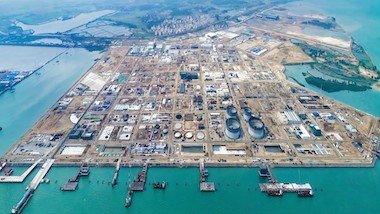
BASF elected to use the HIMA Smart Safety Test for the Zhanjiang Verbund Site Project in China.
Source: HIMA
In the end, the BASF team found success with the project quality and delivery speed, and both parties are currently exploring how to apply the smart safety test during the upcoming loop tests and automatic proof testing during the plant operations.
“This project is an excellent example of how close collaboration between a user and a solution vendor can create added value at project implementation and operation,” said Peter Sieber, vice president strategic marketing at the HIMA Group.