
In 2022, the FBI’s Internet Crime Complaint Center (IC3) received 800,944 complaints, a 5 percent decrease from 2021. However, losses have grown to more than $10.2 billion in 2022 from $6.9 billion in 2021.
On top of that, while the number of reported ransomware incidents has decreased, IC3 researchers said they know not everyone that experienced a ransomware incident reported them. So, it just goes to show whether an incident ends up reported or not, ransomware continues to remain a serious threat to the public and to the economy.
As a part of the IC3, the Recovery Asset Team (RAT), established in 2018, streamlines communications with financial institutions and FBI field offices to assist freezing of funds for victims.

To that end, in 2022, RAT initiated the Financial Fraud Kill Chain (FFKC) on 2,838 Business Email Compromise (BEC) complaints involving domestic-to-domestic transactions with potential losses of over $590 million. A monetary hold ended up placed on $433 million, which represents a 73 percent success rate. In 2022, RAT saw a 64 percent increase in FFKCs initiated compared to 2021.
The goals of a RAT-financial institution partnership include:
- Assist in the identification of potentially fraudulent accounts across the sector
- Remain at the forefront of emerging trends among financial fraud schemes
- Foster a symbiotic relationship in which information is appropriately shared
The IC3 RAT has proven to be a valuable resource for field offices and victims. The following are two examples of the RAT’s successful contributions to investigative and recovery efforts:
In September 2022, the IC3 received a complaint filed by a victim located in the Seattle, Washington area of a BEC who intended a wire of $650,000 be sent to an investor, not realizing their email account was intercepted by a hacker providing fraudulent bank account instructions. The IC3 RAT immediately initiated the Financial Fraud Kill Chain (FFKC) process to freeze the fraudulent financial bank account. Further collaboration with the domestic financial institution enabled a full return to the business of $645,000. The RAT team walked the victim through the recovery process which enabled the return of funds.
Source: IC3
In addition, in July 2022, the IC3 received notice from the Charlotte, North Carolina, field office of an IC3 complaint filed by an attorney seeking assistance with a FFKC on behalf of his clients. The clients were in the process of purchasing a home and received a spoofed email from their supposed realtor instructing them to wire $400,000 to a financial institution for an escrow payment. Once the wire was initiated, it was realized the instructions came from a spoofed email. Upon notification, the IC3 requested a FFKC to the recipient bank. Further collaboration between the attorney and the Charlotte field office confirmed the full amount of $400,000 was returned to the victim, making a full recovery possible due to the FFKC process taken by RAT and the legitimate purchase of the home was able to be made.
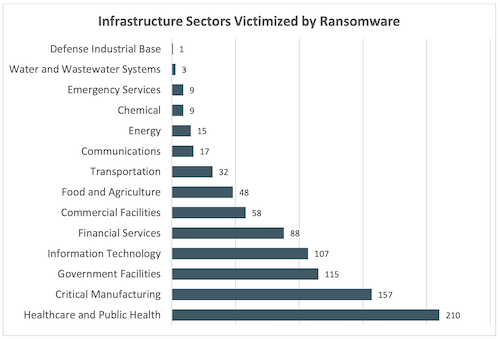
Ransomware is another area that continues to grow and 2022 was no different. IC3 received 870 complaints that indicated organizations belonging to a critical infrastructure sector were victims of a ransomware attack. Of the 16 critical infrastructure sectors, IC3 reporting indicated 14 sectors had at least 1 member that fell victim to a ransomware attack in 2022.
The three top ransomware variants reported to the IC3 that victimized a member of a critical infrastructure sector were Lock bit, ALPHV/Blackcoats, and Hive.
The FBI does not encourage paying a ransom to criminal actors. Paying a ransom may embolden adversaries to target additional organizations, encourage other criminal actors to engage in the distribution of ransomware, and/or fund illicit activities. Paying the ransom also does not guarantee that a victim’s files will be recovered. Regardless of whether you or your organization have decided to pay the ransom, the FBI urges you to report ransomware incidents to the IC3.
Click here for more on the report.