
This sensor could end up applied to diverse fields, such as detection of residual gases during semiconductor manufacturing process and research on electrolysis catalysts.
NO2, produced by the high-temperature combustion of fossil fuels and primarily emitted through automobile exhaust or factory smoke, contributes to an increase in mortality due to air pollution. In South Korea, the annual average concentration of NO2 in the air is regulated to be 30 parts per billion (ppb) or lower by presidential decree. Highly sensitive sensors must be able to accurately detect gases at extremely low concentrations.
Next Generation Sensor
The newly developed sensor developed by Korea Research Institute of Standards and Science (KRISS) President Dr. Ho Seong Lee is a next-generation semiconductor-type toxic gas sensor based on advanced materials, exhibits significantly improved performance and usability compared to conventional sensors.

With its outstanding sensitivity to chemical reactions, the new sensor can detect NO2 much more sensitively than previously reported semiconductor-type sensors, a sensitivity that is 60 times higher.
Moreover, the sensor consumes minimal power operating at room temperature, and its semiconductor manufacturing process enables large-area synthesis at low temperatures, thereby reducing fabrication costs.
The key to the technology lies in the MoS2 nanobranch material developed by KRISS.
Unlike the conventional 2D flat structure of MoS2, this material can synthesize into a 3D structure resembling tree branches, thereby enhancing the sensitivity.
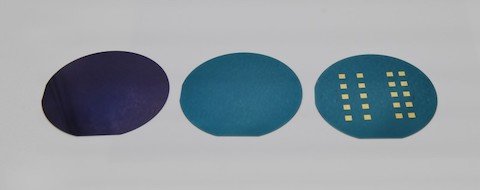
Materials for the ultra-sensitive gas sensor developed by KRISS (left) Synthetic target substrate (Si/SiO2), (center) 3D MoS2 nano-branch advanced material, (right) ultra-sensitive gas sensor.
Source: Korea Research Institute of Standards and Science (KRISS)
Besides its strength of uniform material synthesis on a large area, it can create a 3D structure by adjusting the carbon ratio in the raw material without additional processes.
The KRISS Semiconductor Integrated Metrology Team demonstrated their gas sensor can detect NO2 in the atmosphere at concentrations as low as 5 ppb. The calculated detection limit of the sensor is 1.58 parts per trillion (ppt), marking the world’s highest level of sensitivity.
Saves Time, Cost
This achievement enables precise monitoring of NO2 in the atmosphere with low power consumption. The sensor not only saves time and cost but also offers excellent resolution. It can also contribute to research on improving atmospheric conditions by detecting annual average concentrations of NO2 and monitoring real-time changes.
Another characteristic of this technology is its ability to adjust the carbon content in the raw material during the material synthesis stage, thereby altering the electrochemical properties. This can be utilized to develop sensors capable of detecting gases other than NO2, such as residual gases produced during the semiconductor manufacturing processes. The excellent chemical reactivity of the material can also be exploited to enhance the performance of electrolysis catalysts for hydrogen production.
“This technology, which overcomes the limitations of conventional gas sensors, will not only meet government regulations but also facilitate precise monitoring of domestic atmospheric conditions,” said Dr. Jihun Mun, a senior researcher of the KRISS Semiconductor Integrated Metrology Team. “We will continue follow-up research so that this technology can (end up) applied to the development of various toxic gas sensors and catalysts, extending beyond the monitoring of NO2 in the atmosphere.”